
NRI · 5 May 2026 · 6 min read
NRI Guide to Buying Property in Mumbai's Western Suburbs
A plain English guide for NRIs and OCIs buying a flat in Jogeshwari West, Andheri West or Oshiwara: FEMA rules, NRE and NRO payments, TDS, power of attorney, home loans and repatriation.
By SMGK Editorial Desk · Updated 17 Nov 2026
Non Resident Indians (NRIs) and Overseas Citizens of India (OCIs) can buy residential and commercial property anywhere in Mumbai's western suburbs without prior approval from the Reserve Bank of India; under FEMA, the only categories closed to them are agricultural land, plantation property and farmhouses. Payment has to flow through Indian banking channels, usually an NRE, NRO or FCNR account, tax is deducted at source on the purchase, and a registered power of attorney allows a trusted relative to sign in your absence. This NRI guide to buying property in Mumbai's western suburbs, prepared by SMGK Group, a family developer active in Jogeshwari West, Andheri West and Oshiwara since 2000, takes you through each step in plain terms.
Who can buy, and what: FEMA in general terms
The Foreign Exchange Management Act and the RBI's rules under it treat NRIs and OCIs almost like resident buyers when it comes to housing.
- Allowed: flats, bungalows, plots meant for residential use, shops and offices. There is no cap on how many you may own.
- Not allowed: agricultural land, plantation property and farmhouses, unless they come by inheritance or as a gift from a person resident in India.
- Joint purchase: with another NRI or OCI, or commonly with a resident Indian relative; have a chartered accountant check the paperwork.
- Citizens of certain neighbouring countries need prior RBI permission regardless of residency status.
A flat in a MahaRERA registered project in Jogeshwari West or Andheri West is therefore straightforward on the regulatory side. The complexity sits in payments, tax and paperwork. Rules change, so verify the current RBI master directions before you commit funds.
Where NRIs are buying in the western suburbs
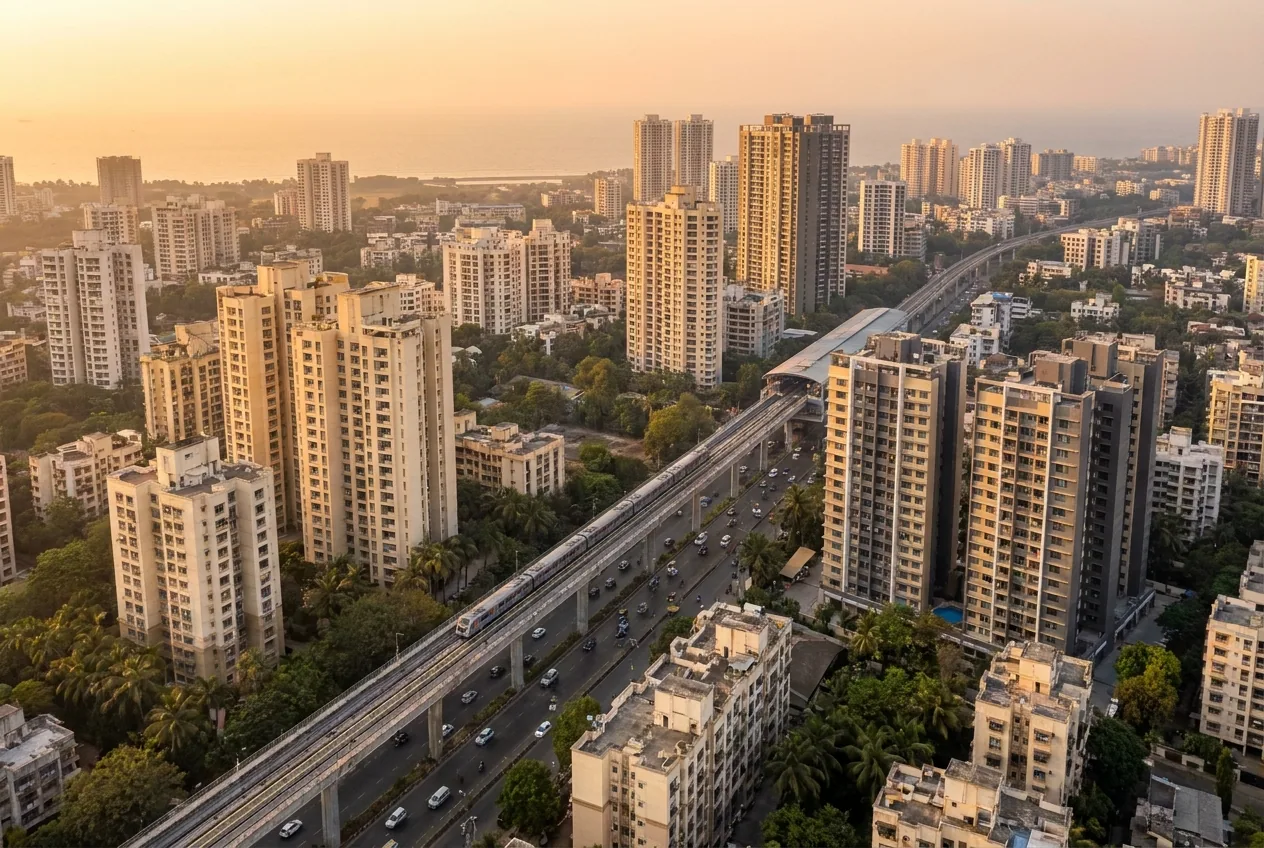
NRI buyers want airport access, a known address for the family back home and a tenant market deep enough that the flat never sits empty. The Jogeshwari West to Andheri West stretch scores on all three: Mumbai airport is roughly 20 to 35 minutes by road, Metro Lines 2A and 7 ring the belt, and rental demand from media, aviation and IT professionals is steady.
| Locality | Typical 2 BHK price (approx, as of 2026) | Why NRIs look here |
|---|---|---|
| Jogeshwari West | Rs 1.6 to 2.7 crore | Value entry, metro access, new towers, strong rental demand |
| Andheri West | Rs 2.2 to 4 crore | Established address, Lokhandwala and Veera Desai Road lifestyle |
| Oshiwara | Rs 1.8 to 3 crore | Link Road retail, media offices, Metro Line 2A stations |
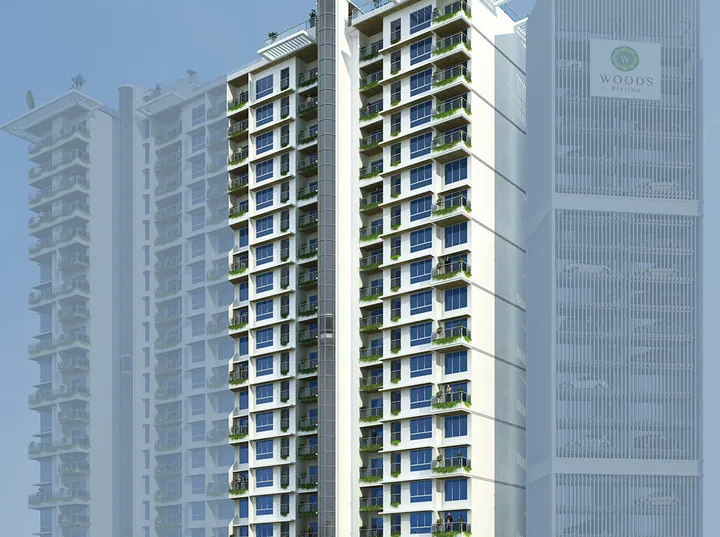
Prices are indicative ranges only; verify current rates with the developer. SMGK Group's own footprint covers more than 5 lakh sq ft of homes in this belt, from the completed SMGK Residency to the ongoing Walnut and Oak at WOODS Platina; you can browse all our projects in one place. For a side by side view of the two main localities, read our comparison of Jogeshwari West vs Andheri West.
Paying for the property: NRE, NRO and FCNR accounts
Every rupee an NRI puts into Indian property must move through normal banking channels. Cash is not acceptable, and neither is paying the seller abroad in foreign currency.
- NRE account: funds remitted from abroad, fully repatriable later. The cleanest route for a purchase you may one day want to sell and take the money out.
- NRO account: Indian income such as rent or dividends. Usable for purchase, but repatriation on sale is subject to the annual limit described below.
- FCNR deposit: foreign currency fixed deposits, also repatriable.
- Inward remittance: a direct transfer from your overseas bank to the developer's or seller's account, with the bank's advice as proof.
Keep every remittance advice and receipt; when you sell, your bank will use this trail to decide how much can leave India.
TDS and tax at the time of purchase
Tax deducted at source depends on who the seller is, not on who the buyer is.
| Situation | TDS the buyer must deduct (general position) | Notes |
|---|---|---|
| Buying from a resident seller or developer, price above Rs 50 lakh | 1 percent of the consideration | Deposit via Form 26QB; buyer needs a PAN |
| Buying from an NRI seller | Substantially higher, linked to the seller's capital gains rate plus surcharge and cess | Buyer needs a TAN; seller may apply for a lower deduction certificate |
| Under construction instalments | TDS on each instalment once the threshold is crossed | Developer's receipts should reflect it |
Stamp duty in Mumbai is approximately 6 percent for men and 5 percent for women, including the 1 percent metro cess, plus registration capped at Rs 30,000, as of 2026; verify current rates. GST at 5 percent applies on under construction flats. Our guide to stamp duty and registration charges in Mumbai has the detail. Because penalties for short deduction fall on the buyer, consult a chartered accountant before the first payment.
Power of attorney, home loans and documents
Most NRIs cannot fly in for every signature, so a power of attorney (PoA) is the practical tool. Grant a specific PoA, limited to the one property and the acts needed (signing, registering, taking possession), to a parent, sibling or spouse. Sign it before the Indian consulate or a notary abroad, apostille it where required, and have it stamped in Maharashtra within the permitted window after it reaches India. The registrar will ask the PoA holder for the original and your identity proof.
Home loans are available to NRIs from most Indian banks and housing finance companies. Expect a shorter maximum tenure, a slightly higher rate than residents, income proof from your country of residence, and EMIs paid only from NRE or NRO accounts. Lenders usually fund up to 75 to 80 percent of the agreement value, so plan for the balance plus stamp duty and GST from your own funds. Our home loan and EMI guide explains the arithmetic.
Keep ready your passport and visa or OCI card, overseas address proof, PAN, recent overseas income proof and bank statements, photographs and the PoA if someone signs for you. For the project itself, run through our MahaRERA checklist before booking a flat and confirm title, approvals and occupation certificate status with the developer.
Repatriation when you eventually sell
For up to two residential properties bought with NRE or FCNR funds, the amount originally remitted can generally be repatriated. Gains above that, and proceeds of properties bought with NRO funds or rupee income, fall under the general USD 1 million per financial year limit from the NRO account, after tax clearance (Forms 15CA and 15CB from a chartered accountant). Rental income can be repatriated after tax. Limits and forms change, so verify current RBI rules at the time of sale.
Key takeaways
- NRIs and OCIs can buy flats, shops and offices freely; agricultural land and farmhouses are excluded.
- Pay only through NRE, NRO or FCNR accounts or direct inward remittance, and keep the paper trail.
- Deduct 1 percent TDS when buying from a resident above Rs 50 lakh; much more when buying from an NRI, with a TAN.
- Use a specific, properly stamped power of attorney and budget for stamp duty, registration and GST on top of the price.
- Repatriation has limits and paperwork; choose the account you pay from with the exit in mind.
- Consult a chartered accountant and verify current RBI rules before you commit.
SMGK Group has worked with NRI families for more than two decades: we coordinate site visits with your relatives in Mumbai, share documents digitally and walk your PoA holder through registration. Explore the smart 2 BHK homes at Walnut and Oak, WOODS Platina or the Clever Living homes at Golden Heights, then contact us for a video walkthrough at a time that suits your time zone.
Your questions, answered
Can an NRI buy a flat in Mumbai without RBI permission?
Yes. Under FEMA, NRIs and OCIs can buy residential and commercial property in India, including flats in Jogeshwari West and Andheri West, without any prior RBI approval. The only exclusions are agricultural land, plantation property and farmhouses. Payment must come through Indian banking channels such as NRE, NRO or FCNR accounts. Verify the current RBI rules with a chartered accountant before you pay.
Which account should an NRI use to pay for property in India?
Use an NRE or FCNR account if you may want to repatriate the sale proceeds later, because money that came from abroad is easier to take out again. An NRO account holds Indian income such as rent and is also acceptable for purchase, but repatriation is then limited to the general annual cap. Direct inward remittance from your overseas bank is fine too; keep every bank advice.
How much TDS does an NRI buyer deduct when purchasing a flat?
If you buy from a resident seller or a developer and the price exceeds Rs 50 lakh, deduct 1 percent of the consideration and deposit it through Form 26QB using your PAN. If the seller is also an NRI, the deduction is substantially higher and you need a TAN. Short deduction penalties fall on the buyer, so consult a chartered accountant before the first instalment.
Can an NRI get a home loan for a flat in Jogeshwari West?
Yes. Most Indian banks and housing finance companies lend to NRIs, typically up to 75 to 80 percent of the agreement value, with a shorter maximum tenure and a slightly higher rate than for residents. You will need overseas income proof, a PAN, and EMIs must be paid from an NRE or NRO account. Budget stamp duty, registration and GST separately.
Do I need to be in India to register the agreement?
No. You can grant a specific power of attorney to a parent, sibling or spouse covering signing, registration and possession for that one property. Sign it before the Indian consulate or a notary abroad, apostille it where required, and have it stamped in Maharashtra within the permitted window after it arrives. The PoA holder then signs at the registrar's office on your behalf.
How much can an NRI repatriate after selling a Mumbai flat?
In general terms, for up to two residential properties bought with NRE or FCNR funds, the amount originally remitted can be repatriated. Gains above that, and proceeds of properties bought from NRO funds, fall within the USD 1 million per financial year limit from an NRO account, after tax clearance via Forms 15CA and 15CB. Rules change, so verify current RBI guidance at the time of sale.