



- Home
- Insights
- Redevelopment
- Redevelopment vs Self Redevelopment: Which Suits Your Society?
Redevelopment · 30 Jun 2026 · 6 min read
Redevelopment vs Self Redevelopment: Which Suits Your Society?
Developer led redevelopment or self redevelopment? A practical comparison for Mumbai housing societies on control, extra carpet area, profit, finance, risk and timelines, with a decision checklist.
By SMGK Editorial Desk · Updated 17 Nov 2026
For a Mumbai housing society the choice of redevelopment vs self redevelopment comes down to a single trade: a developer takes the risk and the profit, while self redevelopment keeps both with the society and typically gives members about 35 to 45 percent extra carpet area instead of the 25 to 35 percent a developer offers. Societies with clear title, a cohesive general body and a competent advisor usually do better with self redevelopment; societies with disputed title or a committee that cannot carry decisions are often better served by a reputable developer. SMGK Group, with over 5 lakh sq ft delivered in Jogeshwari West, Andheri West and Oshiwara since 2000, has built as a developer and advises societies through its T.E.A.M self redevelopment advisory, so this comparison is written from both chairs.
How each model works
Developer led redevelopment. The society invites offers, selects a developer and signs a development agreement. The developer funds construction, pays transit rent and a corpus, gives members new flats with an agreed extra area, and keeps the sale flats. The society's job is largely done at signing; its leverage is in the agreement.
Self redevelopment. The society acts as the developer. It appoints a project management consultant, architect, engineer, legal advisor and contractor, raises a construction loan, typically from a district cooperative bank, builds, hands over members' flats and sells the balance itself. The society's job runs for the full project. Our complete guide to self redevelopment in Mumbai covers the full process.
Redevelopment vs self redevelopment: the comparison
| Factor | Developer led | Self redevelopment |
|---|---|---|
| Control over design and specification | Developer, within the agreement | Society general body |
| Extra carpet area for members | About 25 to 35 percent | About 35 to 45 percent |
| Profit from sale flats | Developer | Society |
| Corpus fund | Negotiated, fixed | Determined by project surplus |
| Funding | Developer's capital and sales | Cooperative bank loan plus sales, interest subsidy for eligible projects |
| Government concessions | Standard | Extra FSI or TDR, stamp duty concession, verify current terms |
| Financial risk | Mostly developer | Society, mitigated by structure |
| Workload on committee | Low after signing | High throughout |
| Typical timeline | 3 to 5 years, depends on developer | 3 to 5 years, depends on approvals and contractor |
| Transparency | Limited to what the agreement provides | Full, every tender visible |
| Best suited to | Societies with weak consensus or title issues | Societies with clear title and strong consensus |
Figures are typical ranges and depend on plot size, road width, existing FSI and current regulations. Verify the numbers for your plot in a proper feasibility study.
Where developer led redevelopment wins
- Certainty of delivery when the developer is financially strong and has a record in the same locality. Ask to see completed buildings, not renderings.
- No member liability. The construction loan is the developer's problem.
- Less committee work. Once the agreement is signed and the bank guarantee is in place, members mostly wait.
- Speed in disputed situations. A developer with legal depth can sometimes resolve title or tenancy issues faster than a society acting alone.
The price of these advantages is the margin. On a plot where the sale component is large, that margin can be very substantial, and it leaves the society permanently.
Where self redevelopment wins
- Area and money. The developer's margin is converted into extra carpet area, better specification and a corpus. On the same plot the member outcome is usually meaningfully better.
- Government support. Maharashtra's scheme provides cooperative bank finance, an interest subsidy for eligible projects, additional FSI or TDR concessions and a stamp duty concession. Terms are revised from time to time, so verify current scheme terms.
- Quality control. The society chooses the contractor and inspects the work.
- No dependence on a developer's finances. Projects stall when developers overextend; a society with a sanctioned loan and stage wise disbursement is insulated from that.
The price is responsibility. The society must run a project, which is why the choice of a single window advisor matters more than any other decision.
The questions that decide it
Before the general body votes, answer these honestly:
- Is title clear? Conveyance or deemed conveyance in the society's name is usually required for bank finance. If not, start there; it is needed for either route.
- Does the general body agree? Self redevelopment needs sustained consensus. Count the members who will actively oppose, not just those who will vote yes.
- Does the feasibility work? Get a feasibility report that shows member area, sale area, loan size, interest and surplus. If the sale component is small, the developer's margin is also small and the two routes converge.
- Can the committee devote time for three to five years? If not, can an advisor carry that load?
- What is the fallback? A society that starts self redevelopment and cannot complete it is in a weak position. The bank structure and the advisor's track record are your fallback.
Costs members should understand under both routes
Under either route, members end up with a new flat and, in most cases, a permanent alternate accommodation agreement and later a fresh agreement for the new flat. Stamp duty treatment differs between the two routes and self redevelopment attracts a concession on certain documents; read our guide to stamp duty and registration charges in Mumbai and verify current rates. Both routes must state carpet area in RERA terms; see carpet area vs built up area so that comparing offers is apples to apples.
How SMGK approaches both
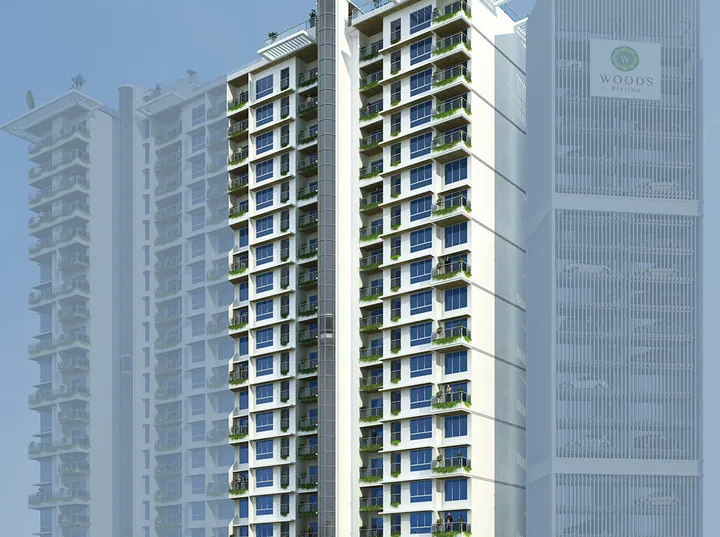
SMGK has built over 20 projects in Mumbai as a developer, including SMGK Residency and the WOODS Platina towers in Jogeshwari West. Through SMGK Estate Management and its T.E.A.M advisory, Title holders, Engineers, Architects and Managers, the group provides a single window for societies that choose self redevelopment: feasibility, professional appointments, bank finance and interest subsidy guidance, stamp duty concession and TDR rebate structuring, and project management through occupation. The society keeps full control and all profits. Our leadership across construction engineering, finance and legal is listed on our team page, and frequently asked questions are answered on our FAQ page.
Key takeaways
- Developer led redevelopment trades profit and control for certainty and low committee workload.
- Self redevelopment keeps profit and control with the society and typically yields about 35 to 45 percent extra carpet area against 25 to 35 percent.
- Maharashtra supports self redevelopment with bank finance, interest subsidy, FSI or TDR concessions and a stamp duty concession; verify current terms.
- Clear title, consensus and a sound feasibility report are the deciding factors.
- A single window advisor such as SMGK's T.E.A.M turns self redevelopment from a burden into a managed project.
If your society is debating redevelopment vs self redevelopment, we will give you a feasibility based answer, not a sales pitch. Visit SMGK Estate Management, see our completed work at SMGK Residency, or contact us to arrange a presentation to your committee.
Your questions, answered
What is the main difference between redevelopment and self redevelopment?
In developer led redevelopment the society signs an agreement and the developer funds, builds and keeps the sale flats as profit. In self redevelopment the society acts as the developer, appoints its own professionals, raises a bank loan, builds and sells the extra flats itself, keeping full control and the entire profit. The trade is certainty and low workload against area and money.
How much more area do members get with self redevelopment?
Members typically receive about 35 to 45 percent extra carpet area in self redevelopment against about 25 to 35 percent from a developer. The gain comes from the developer's margin remaining with the society and from additional FSI or TDR concessions available under the Maharashtra scheme. Exact figures depend on your plot, road width and current regulations, so commission a feasibility study.
Which societies should choose developer led redevelopment?
Societies with unresolved title or tenancy disputes, a general body that cannot sustain consensus for several years, or a committee without time to oversee a project are usually better served by a reputable developer with completed buildings in the same locality. The developer carries the financial risk and the workload, in exchange for the margin on sale flats.
Is self redevelopment risky for members?
It carries more responsibility than a developer led project because the society is collectively liable for the construction loan. The risk is managed by a conservative feasibility report, a loan kept small relative to sale value, stage wise bank disbursement, a fixed rate contract with contingency, transparent tenders and an experienced single window advisor. Structured well, it is a managed project rather than a gamble.
Can SMGK help a society decide between the two routes?
Yes. SMGK Estate Management's T.E.A.M advisory prepares a feasibility study showing member area, sale area, loan size and surplus under self redevelopment, so the general body can compare it with developer offers on equal terms. Having built over 20 projects as a developer since 2000, SMGK understands both models and gives a feasibility based recommendation.
What government support exists for self redevelopment in Maharashtra?
In general terms the Maharashtra scheme provides project finance through district central cooperative banks, an interest subsidy for eligible projects, additional FSI or TDR concessions, a stamp duty concession on certain documents and a single window clearance intention. Terms and percentages have been revised over time and may change again, so verify current scheme terms with the authorities and your advisor.